






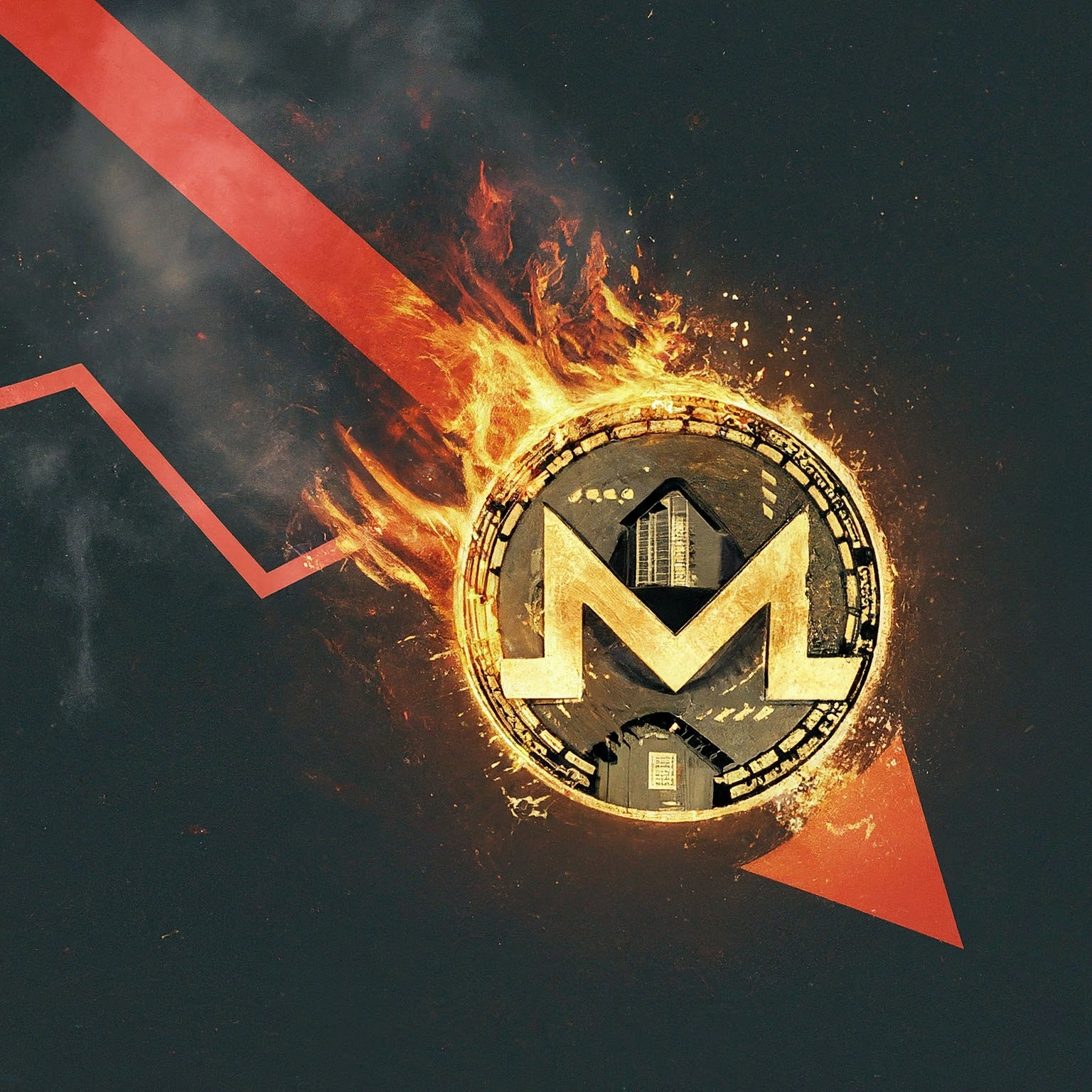
The seemingly impenetrable fortress of Monero’s privacy has been breached, not by a sophisticated hack, but by a controversial experiment in game theory. Qubic, a project spearheaded by IOTA co-founder Sergey Ivancheglo, claims to have seized control of over 51% of Monero’s hashrate, raising serious questions about the network’s decentralization and security.
The 51% Threat: A Deep Dive
In the world of proof-of-work blockchains, 51% control is the ultimate power play. It allows malicious actors to rewrite transaction history, censor transactions, and execute double-spend attacks. While often discussed theoretically, these attacks have wreaked havoc on networks like Ethereum Classic and Bitcoin Gold in the past, demonstrating their very real potential for damage.
Qubic’s Gambit: A “Useful” Takeover?
Qubic’s strategy involves a “useful proof-of-work” system that converts Monero mining rewards into USDT, which is then used to buy and burn QUBIC tokens. This unusual mechanism has fueled Qubic’s rapid ascent from less than 2% of Monero’s hashrate in May to over 51% currently. The implications of this maneuver are profound, as it demonstrates how economic incentives can be weaponized to gain control over a larger network.
Monero’s Defense: Decentralization Under Fire
Monero’s RandomX algorithm, designed to promote decentralized CPU mining and resist ASIC dominance, has been circumvented by Qubic’s strategic approach. This raises concerns about the long-term viability of Monero’s defenses and the vulnerability of other privacy coins to similar attacks. The implications are far-reaching, as the very principle of decentralization, a cornerstone of the cryptocurrency ethos, is now under scrutiny.
The Fallout: Price Volatility and Community Backlash
The market has reacted swiftly to the news, with Monero’s XMR token experiencing a significant price drop. The community is abuzz with debate about the ethics and consequences of Qubic’s actions, with some lauding it as a brilliant demonstration of game theory, while others condemn it as a dangerous attack on network integrity. The incident has sparked DDoS attacks targeting Qubic, highlighting the tension and distrust within the community.
The Future of Monero: What Lies Ahead?
Qubic’s “experiment” has exposed a critical vulnerability in Monero’s architecture, raising fundamental questions about the future of privacy coins. The long-term impact on Monero’s price and its community’s trust remains to be seen. This incident serves as a stark reminder of the ongoing battle for control and security in the decentralized world, and the need for robust mechanisms to defend against novel attack vectors. What are your thoughts on this unprecedented event? Share your perspective in the comments below.





Deixe um comentário